We use cookies to improve your browsing experience, serve personalized content, and analyze our traffic. By clicking ‘Accept All’, you consent to our use of cookies. You can manage your preferences or learn more in our Privacy Policy.
The story of Manolikakis Coffee begins in Chania in 1886, when Konstantinos Matthaiou Manolikakis opened the first House of Coffee in Greece. With remarkable spirit of entrepreneurship, he was the first Greek to import fine Brazilian coffee. He also imported sugar from Cuba and Czechoslovakia along with tea from distant Ceylon, to meet the island’s growing demand.
In his first workshop at Kanevaro street, coffee was manually grinded in large bowls. Their aroma slowly became part of everyday life in the old town. His first retail shop in Katolas square was set on fire in 1896, during the massacres of the Cretan people by the Turkish occupants of the time.
The story of Manolikakis Coffee begins in Chania in 1886, when Konstantinos Matthaiou Manolikakis opened the first House of Coffee in Greece. With remarkable spirit of entrepreneurship, he was the first Greek to import fine Brazilian coffee. He also imported sugar from Cuba and Czechoslovakia along with tea from distant Ceylon, to meet the island’s growing demand.
In his first workshop at Kanevaro street, coffee was manually grinded in large bowls. Their aroma slowly became part of everyday life in the old town. His first retail shop in Katolas square was set on fire in 1896, during the massacres of the Cretan people by the Turkish occupants of the time.
This is when he bought the iconic bulding of Mousouron 18, paying in exchange a sac full of gold coins to its Turk owner. Workshop and retail shop were re-located in this very building in 1905, where Oikos Manolikakis was based for a century. Very soon, coffee was no longer just a business. It became a meeting place. The Manolikakis blend was enjoyed by some of the most important figures of the time, such as Eleftherios Venizelos and Prince George.
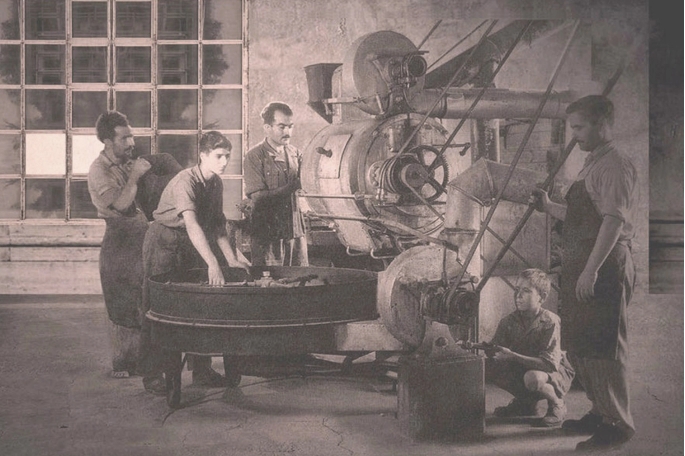
The first roasting machine in Crete, early 1900s was a German Probat.
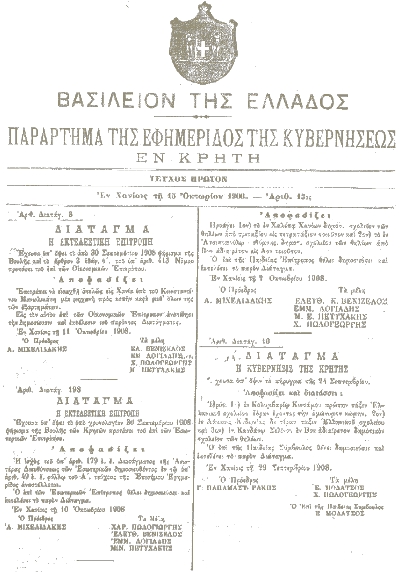
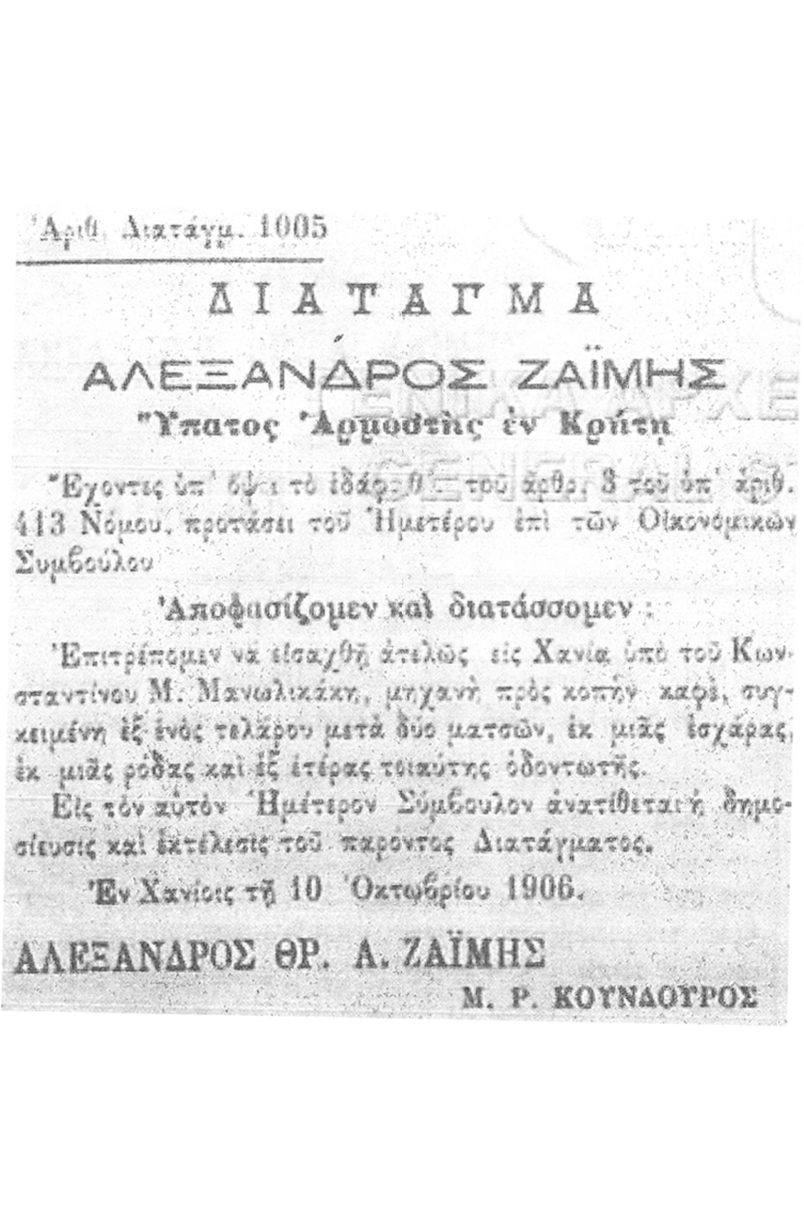
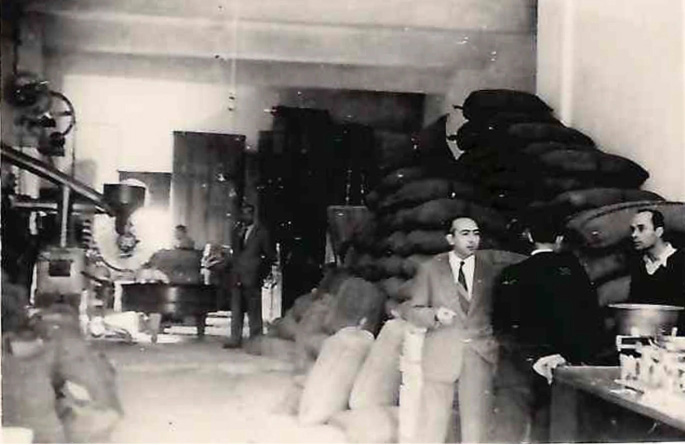
In 1908, with an official decree from the Kingdom of Greece, Konstantinos Manolikakis was granted permission to import the first steam powered coffee grinding machine to Crete. Shortly after, he also imported a wood fired Probat roasting machine, the most advanced machine of its time. These advances allowed the family to roast with greater precision and consistency, while staying faithful to the traditional art of blending.
At the same time, Konstantinos M. Manolikakis operated the renowned café of Kipos Public Municipal garden. Chania was the capital of Crete at that time and the café operated as the main cultural point for the island. Through time, it hosted people of the arts and celebrated personalities of the modern political Greek history, such as N.Kazantzakis, S.Vembo, K.Karyotakis, M.Kallas, A. Onassis, M.Hatzidakis, S.Venizelos.
Furthermore, in 1905, together with his business partner D. Savvakis, operated the first permanent open air cinema called “cine Acetilini”, todays’ cinema “Kipos” being the worlds’ first open cinema.
Konstantinos M. Manolikakis contribution to the social and cultural life of Chania was major and opened the horizons to his descendants.
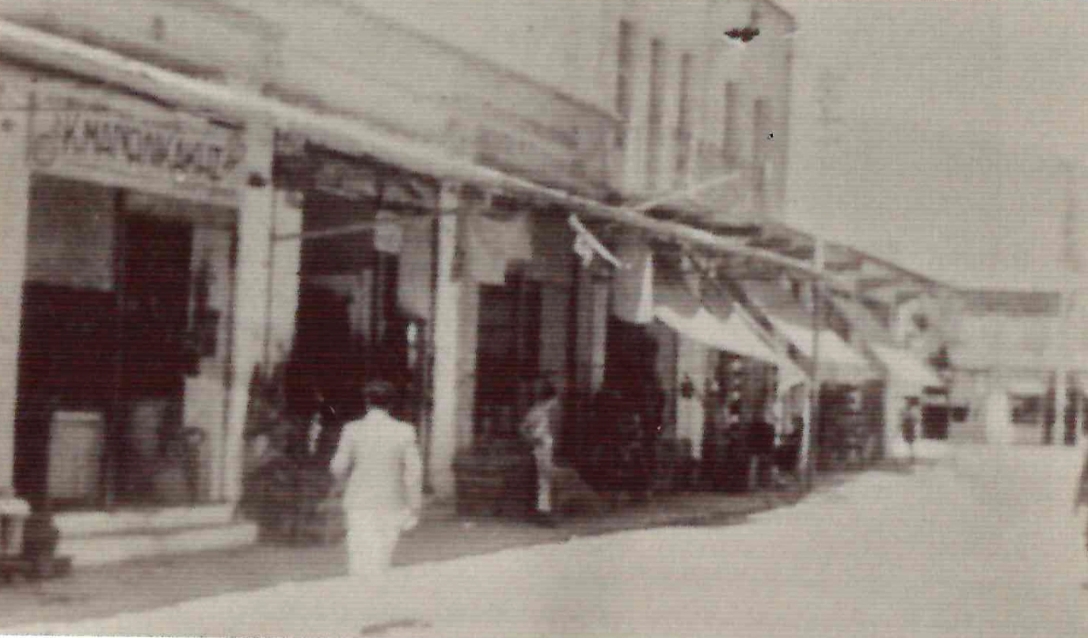
Mousouron Shop, Kale Kapisi Street during the Ottoman period
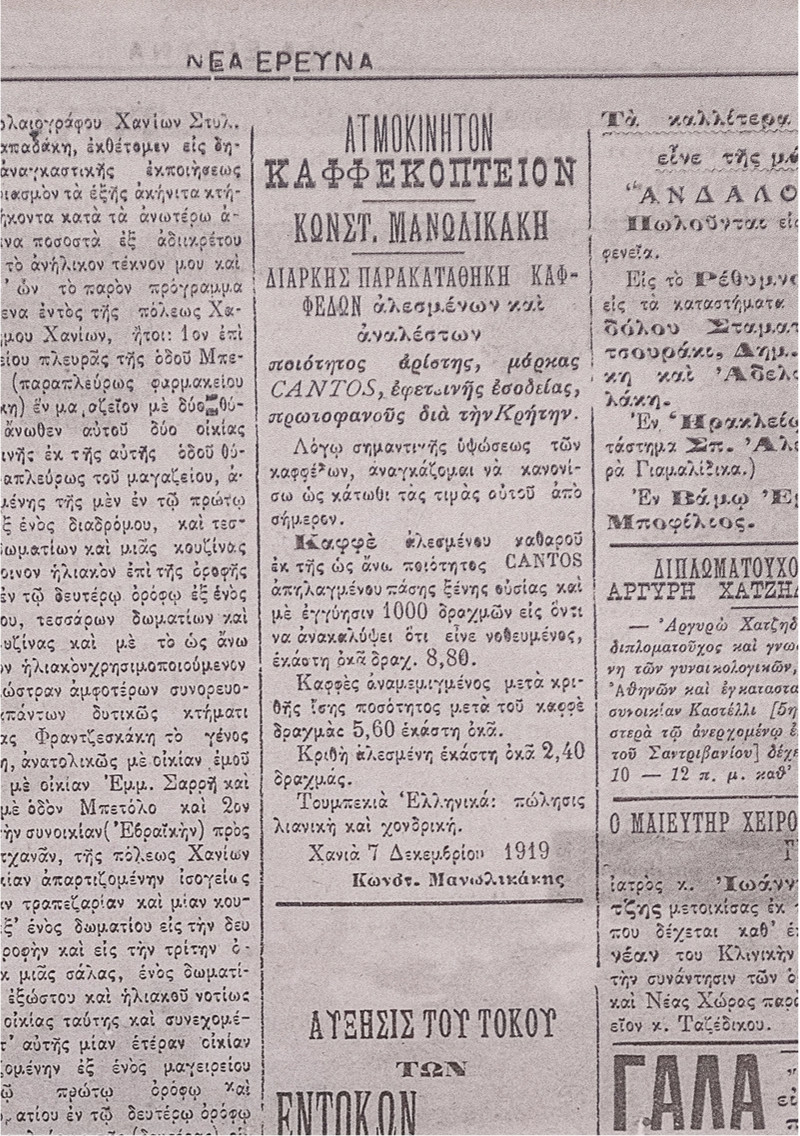
1919
Steam-powered Coffee Roastery advertisement
1906
Decree of 1906 – during the Cretan State, introduction of the first mechanical coffee-grinding mill, signed by the then High Commissioner of Crete, Alexandros Zaimis
1919
Steam-powered Coffee Roastery advertisement
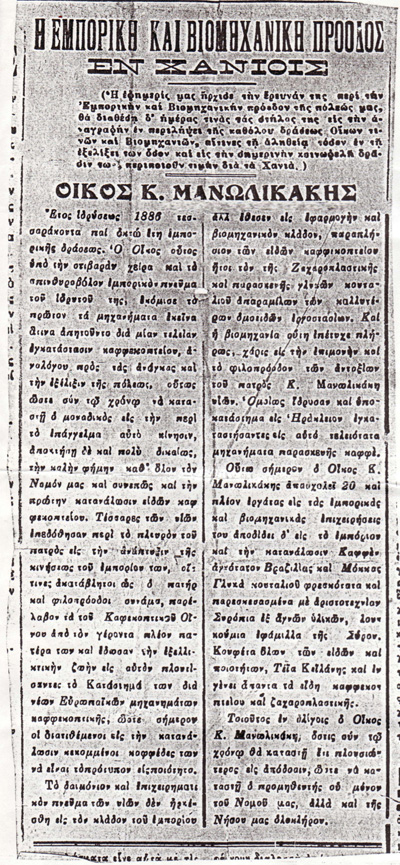
Article regarding the growth of the House of K. Manolikakis
Coffee-grinding shop, Mousouron Street
Article regarding the growth of the House of K. Manolikakis
1936
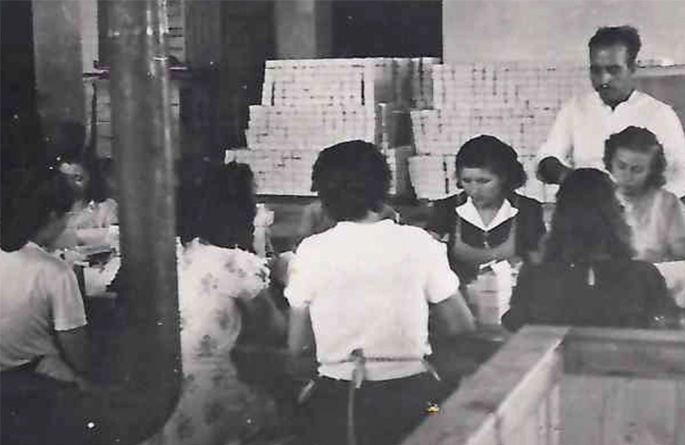
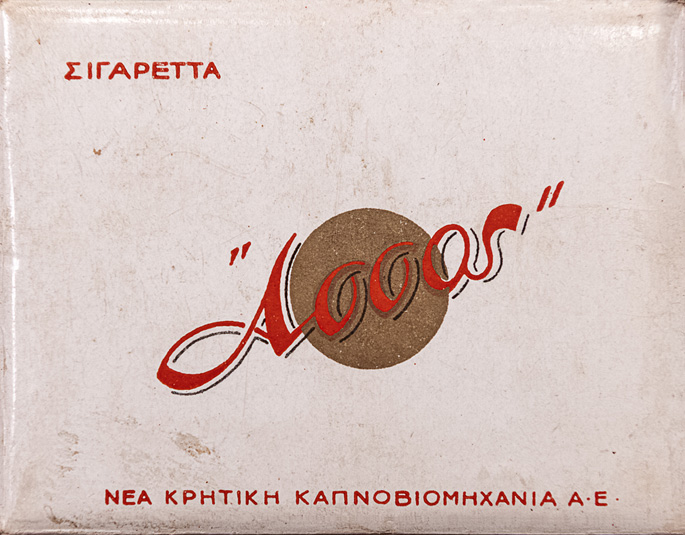
Tobacco factory on Apokoronou Street, Chania
1955
Thessaloniki International Fair
1956
Poster at Chania
1955
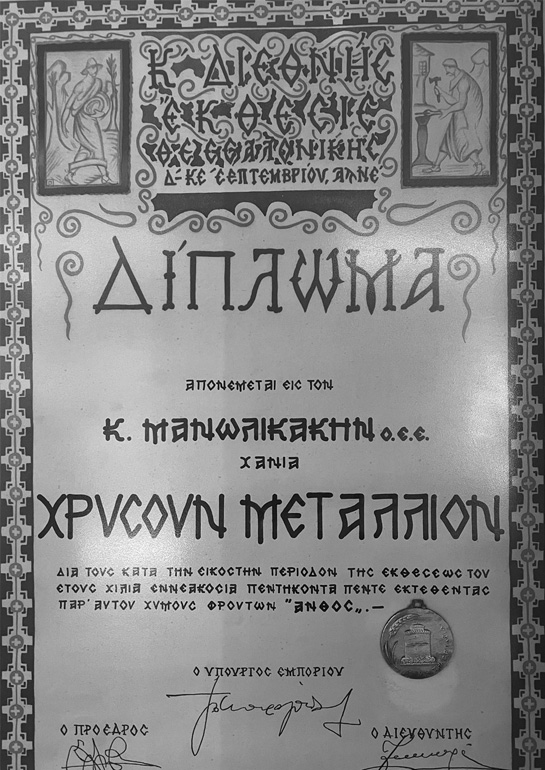
Gold medal at the Thessaloniki International Fair for Manolikakis Juices
1956
Poster at Chania
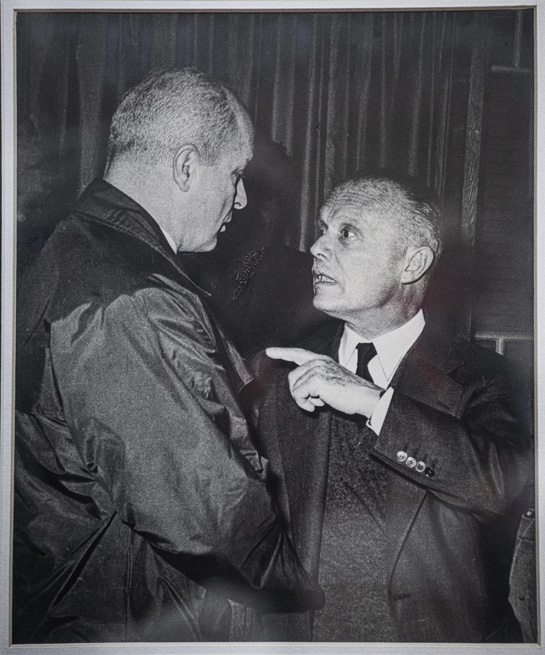
Stelios Manolikakis with Sofoklis Venizelos
The company expanded in the 1930s by his seven sons Philippos, Matthaios, Giannis, Stefanos, Kostis, Stelios and Polychronis. They founded the New Cretan Tobacco Company based in Apokoronou street, producing the first Assos cigarettes. At the same time, they also operated an olive mill at the port of Kissamos, producing olive oil and soap products. During the Second World War, olive mill and tobacco factory were totally destroyed. The family continued supplying cigarettes across Crete until 1946 when their stock ended.
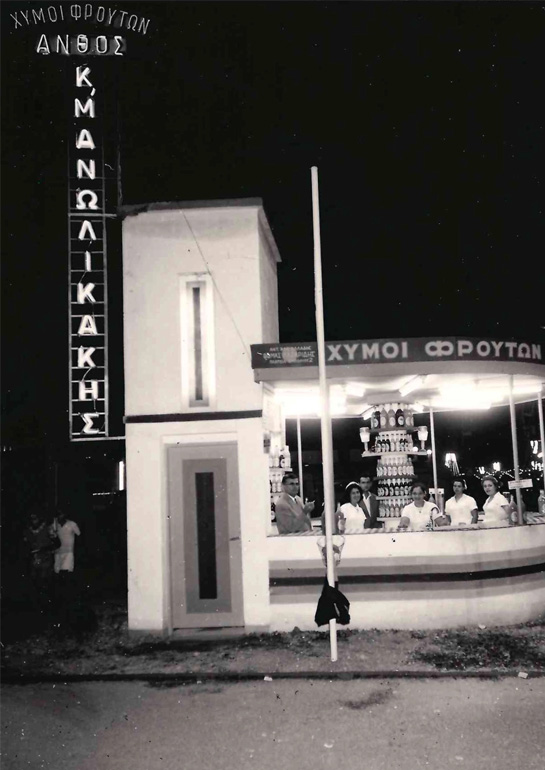
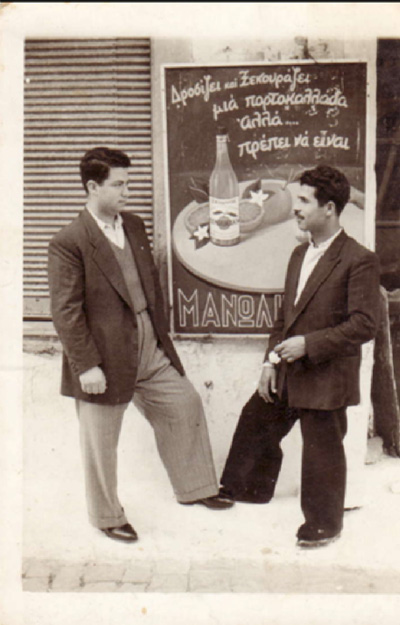
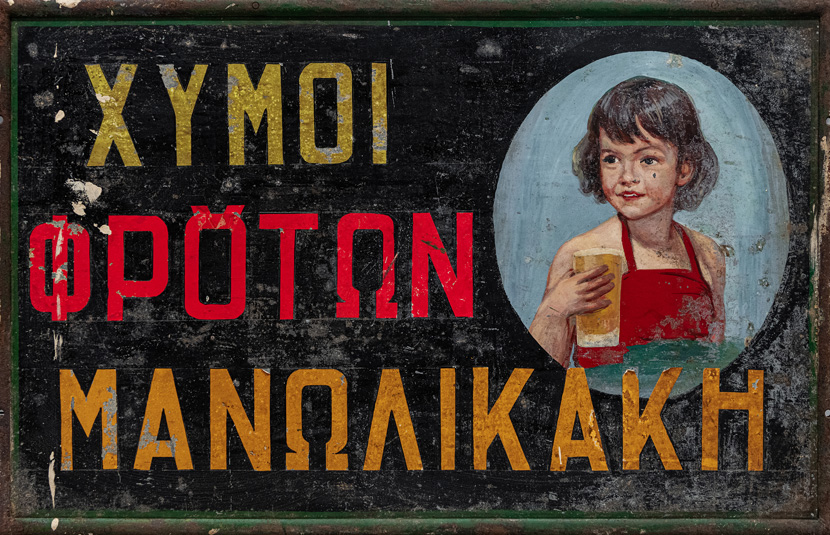
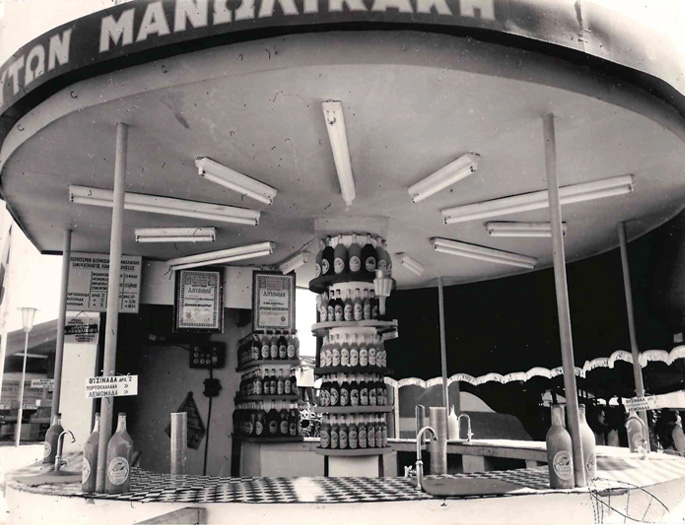
In the 1950s, Manolikakis brothers began producing concentrated juices made from local oranges, lemons and sour cherries, in Spartis street, Koum Kapi district. Their high-standard factory was equipped with the best of its time Italian machinery. The quality of their juices was soon recognised, earning 60% of the total Greek market and winning gold medals at the Thessaloniki International Fair for two consecutive years. It became so well known that even after production stopped in the late 1970s, the official annual price list of the Ministry of Commerce continued to describe orange squash as “Manolikakis-type juice”. The name had become a measure of quality.
Through every chapter, coffee remained at the heart of the family. In the late twentieth century, the new generation, Kostis Steliou Manolikakis, returned to this origin and built a modern roastery in the industrial area of Heraklion. There, tradition met technology. The old roasters were replaced by state of the art roasting systems, yet the same values guided every decision: honesty, effort, hospitality and respect for the people who enjoy their coffee.
Today, the fifth generation of Manolikakis family continues this journey. Production may be driven by innovation, but what inspires them has not changed. Coffee is still a ritual, a gesture of friendship, a moment that gathers the history of the Manolikakis family into the finest blend and the warmth of a shared cup.
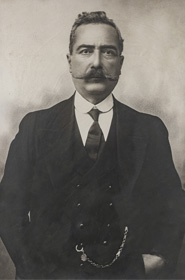
FOUNDER
He was the son of a chieftain of the Cretan Revolution from Kerameia in Chania. Despite being illiterate, he managed to create the First Coffee Roastery in Greece. He died of heartbreak, shortly after the loss of his wife, Maria.
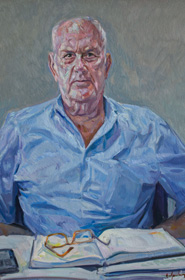
(1945-2024)
Graduate of Athens University of Economics and Business (ASOEE). He served as Chairman and CEO of the company from 1988 to 2024.
Portrait by Dimitris Andreadakis, oil on canvas, 2025.